
What are the Alien Prequels
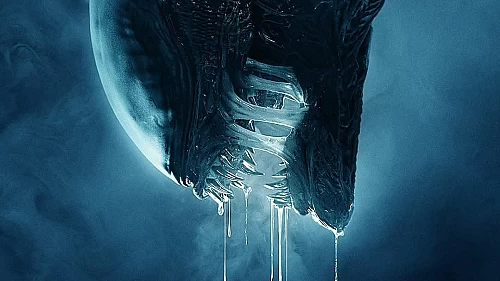
The Alien prequels expand the mythology of Ridley Scott’s original Alien (1979) by exploring the origins of the Xenomorph species, the mysterious Engineers, and humanity’s place in a much larger cosmic design. Beginning with Prometheus (2012) and continuing in Alien: Covenant (2017), these films shift the franchise from survival horror into philosophical science fiction, examining themes of creation, evolution, and artificial intelligence.

Set decades before the events aboard the Nostromo, the prequels introduce the Engineers, an ancient and technologically advanced species believed to have played a role in the creation of human life. Archaeological discoveries across Earth reveal star maps pointing to distant worlds, leading scientists like Elizabeth Shaw and Charlie Holloway to seek answers about humanity’s origins. What they find instead is a far more dangerous truth — one involving biological weapons and catastrophic experimentation.

Central to the prequel narrative is the black goo pathogen, a mutagenic substance capable of rewriting genetic material with unpredictable and often violent results. This substance is heavily implied to be a precursor to the Xenomorph life cycle, capable of producing a wide variety of organisms depending on the host. Early forms of these creatures, such as the Trilobite, Deacon and the Neomorph, demonstrate the unstable and evolving nature of this bio-weapon.

Another key figure throughout the Alien prequels is David, the android introduced in Prometheus and further developed in Alien: Covenant. Unlike earlier artificial beings in the franchise, David exhibits curiosity, ambition, and a disturbing desire to create life of his own. His experiments with the black goo pathogen lead to the refinement of what could eventually become the Xenomorph, positioning him as a possible architect of the species.
Alien: Covenant bridges the gap between abstract origin story and recognizable horror by presenting creatures that more closely resemble the classic Xenomorph. Through David’s continued experimentation, the film suggests that the iconic design seen in Alien may not be entirely natural, but instead the result of deliberate engineering — blurring the line between evolution and artificial creation.


The prequels also deepen the thematic scope of the franchise. Questions surrounding creators and their creations are mirrored across multiple layers: Engineers create humans, humans create androids, and androids attempt to create life in their own image. This recursive cycle introduces a philosophical dimension that contrasts with the raw survival narrative of the original film.
While the prequels provide possible answers to long-standing mysteries, they also introduce ambiguity. The true origin of the Xenomorph remains open to interpretation — whether it is a natural species refined by Engineers, a bioweapon gone out of control, or something shaped by David’s obsession. This uncertainty preserves the cosmic horror at the heart of the franchise.

Ultimately, the Alien prequels reframe the universe of Alien as one driven not just by fear of the unknown, but by the consequences of creation itself. By expanding the timeline and introducing new forces at play, these films transform the Xenomorph from a singular terror into part of a much larger and more unsettling origin story.
How the Prequels Ended
As of right now, the Alien prequels remain open-ended. Alien: Covenant concluded with David successfully deceiving the surviving crew and assuming control of the colony ship Covenant. After Walter was seemingly defeated, David impersonated him and gained the trust of Daniels and Tennessee, the remaining human survivors. Once they were placed into hypersleep, David revealed his true identity and regurgitated two Xenomorph embryos, which he secretly stored among the thousands of human colonist embryos aboard the ship. As the USCSS Covenant continues its journey toward its intended destination (Origae-6), David was left alone to continue his experiments, effectively ensuring that the future colony would become the foundation for his own vision of engineered life. The fate of Daniels, Tenessee remain unknown. Whether the Covenant successfully made it to Origae-6 also remains unknown. Many questions remain unanswered.

Ridley Scott's Original Plan
Back when Prometheus was conceived, director Ridley Scott had initially planned for a new trilogy - three individual films which would have culminated by leading into his 1979 original Alien. The original plan was to expand upon the origins of the mysterious Derelict ship discovered on LV-426 - why it was carrying a cargo full of Xenomorph Eggs and who the fossilized Space Jockey pilot was. Scott's vision for the Alien prequels would have refocused his grand ideas over the course of all three films, coherently explaining the origins of the Xenomorph and the Pilot. Unfortunately however, these plans were ultimately derailed after the release of Prometheus back in 2012.

What Caused a Change of Plans
During the press-junkets for Prometheus, Scott was famous for mentioning how he considered the beast [Xenomorph] cooked; every film since his original had expanded on the Xenomorph itself in so many ways, he felt the bigger and more attractive questions left unanswered had to do with the Derelict craft and its Pilot (the Space Jockey). Scott's ambitious reinvention of the franchise was not met with the reception he was hoping for.
While Prometheus itself was a commercial success for 20th Century Fox, the film left critics and fans divided; half of audiences appreciated Scott's bold new direction, while the other half felt cheated out of another Xenomorph slaughter-fest. Thanks to the internet and the advent of social media - these opinions actually had an impact and ultimately influenced studio executives. By the time Scott was ready to embark on the second of his three planned Alien prequels - he was forced to un-cook the beast, and thus Alien: Covenant brought back that classic Alien title prefix and focused more heavily on Xenomorph-like creatures - moving away from expansive world-building and ambiguous, philosophical ideas, and reverting back to claustrophobic space horror. Ironically, this pivot felt like a misdirection and the film under-performed at the box office, further dividing fans.
The prequels remained sidelined after Alien: Covenant until their elements were referenced in Fede Alvarez's Alien: Romulus. Although Romulus is a sequel to Scott's original and not a prequel, the inclusion of prequel elements helped to re-introduce the bigger ideas Scott planted in Prometheus, maintaining their relevancy and importance in films to come.
Where will the Prequels go next?
After 14 years, things have come full circle, many now consider Promtheus a sci-fi classic and appreciate it for what it is - not what they had anticipated it to be back in 2012. Recent surveys as of the last 2 years have revealed that a majority of fans actually would rather Ridley Scott return to direct another Alien prequel, rather than continue on in sequel territory. Even more surprising, another recent survey saw voters rank Alien: Covenant as the second most re-watchable Alien movie of them all - even more re-watchable than James Cameron's Aliens! This change in sentiment from fans has also seemingly had an impact on Scott himself. As of August, 2025 Ridley Scott made headlines again by saying he would for sure make another Alien prequel if he can get the right idea for it.
If and when another Alien prequel does enter development - will it continue on from Scott's original plans? Or will it attempt to pivot the storyline once again? Time will tell.
This article follows our editorial guidelines to ensure accuracy, canon consistency and ongoing updates as new information becomes available.
Published 1h ago • Last Updated: 1h ago